 |
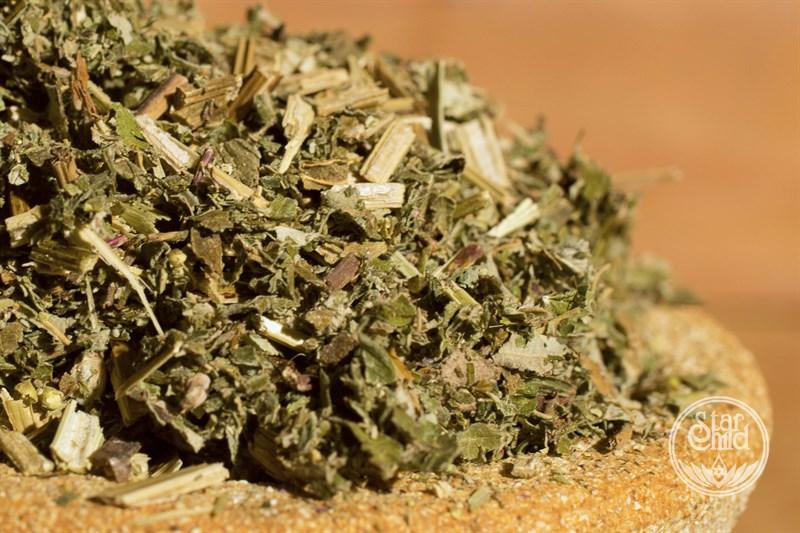
Meadowsweet Organic |
|
|
Meadowsweet Organic
MEADOWSWEET - Organic
(Filipendula ulmaria)
History and Folklore
Sometimes known as 'Queen of the Meadow', this lovely fragrant member of the Rose family is indeed a queen. It commonly grows in marshy grounds where the white flower plume appears like fairy mist among other, bolder herbs. The five petaled flowers are dainty, accentuated by the fact that they never open all at once. Their sweet, almond like fragrance is quite different from that of the leaves, which is more reminiscent of wintergreen. Once upon a time, both were much favoured as strewing herbs. However, Meadowsweet is much more than just a pretty flower. Its history as a medicinal plant is very interesting indeed: who would have thought that this humble herb lent its name to Aspirin' Meadowsweet contains salicylic acid (also found in Willow bark) and served as the 'donor' for the modern version aspirin. The 'spirin' part of the name derives from Meadowsweet's old name Spirea ulmaria.
Meadowsweet was among the most sacred herbs of the Druids and in the olden days it often served as a brewing herb for sacred ales and meads.
Medicinal Uses:
Meadowsweet's salicylic acid compound makes this herb very interesting as a potential pain reliever, especially for arthritic and rheumatic conditions. It is also known to lower the stomach pH level, which helps ease heartburn, stomach ulcers and other inflammatory conditions of the digestive system such as gastritis and colitis. It can also be used to control diarrhoea and is mild enough to be given to children. It is strongly diaphoretic and diuretic and is very effective in breaking fevers. It appears to have a drying effect on the mucous membranes, which makes it a very suitable herb for feverish colds and flu. It has also been used for kidney and bladder inflammations. The leaves are styptic and can be used externally as a compress to staunch the bleeding of stab wounds. Old herbals recommend simmering the flowers in wine for an even greater effect. This concoction is said to stop inner bleeding and leucorrhoea and give relief for painful rheumatic joints, lumbago and sciatica. By virtue of its diuretic action it can reduce oedema and cleanses the blood. CAUTION: Should not be used by individuals who are allergic to aspirin.
CAUTION
Should not be used by individuals who are allergic to aspirin.
Magical Uses:
Meadowsweet was one of the Druid's most revered herbs. In the Mabinogion it is told that, among other herbs, Meadowsweet served as a magical ingredient to create the flower maiden 'Bloddeuedd' who was to be the wife of Llew Llaw Gyffes. Thus it is often associated with love magic. Alas, the magical marriage did not last. Meadowsweet may be more suitable for finding a passionate but short-lived affair rather than marital bliss. It is also associated with the gift of courage and protection and may be used to attune to the fairy realm.
BOTANICALS:
Plants nourish and feed us, add spice to our life, bestow health and beauty, scent and colour and brighten our days. They mediate love, hope and gratitude; they clothe and cleanse us, they heal and soothe our bodies, minds and souls. They touch every aspect of our existence, from our daily sustenance to the air we breathe, to the keys to other dimensions. They are the alchemists that turn sunlight into the green force of life, continuously revolving, restoring, rebirthing through the cycles of time. They truly are the greatest gift of nature, yet also the one we most take for granted.
Star Child's range of botanicals derives from many regions and traditions of the world. We supply only the best quality herbs, using organically grown and sustainably harvested sources if available. The greater the demand for organic products the more readily they will become available. Your choice to buy and our commitment to supply organic herbs is part of the driving force that sows the seeds for a greener, healthier future.
USE:
There are dozens of ways in which herbs can be used. Many culinary herbs not only impart a great flavour but also have subtle effect on the digestive process. Other herbs are more medicinal than culinary and can be used as remedies, based on the wisdom of age old traditional plant knowledge. For more detailed information on the different types of preparations that can be made with herbs, please refer to the BOTANICALS USAGE section.
CAUTION
We support the notion of taking responsibility for one's own well being and thus strive to make all herbs available for use at your own discretion. It should be noted however, that not all herbs are safe to use in all circumstances. Special cautions may apply when suffering from certain medical conditions, when taking synthetic prescription drugs and during pregnancy. Research and familiarize yourself with any herb you intend to use and make sure you are aware of all special cautions that may apply. The information given here is based on thousands of years of traditional use. It is intended for educational purposes only and is not intended to replace a visit to a medical professional where this is necessary.
If symptoms persist or re-occur, or if you are suffering from a serious medical condition, or if you are presently taking prescription drugs, we recommend that you consult a qualified doctor or practitioner before attempting to help yourself. Look for a practitioner/doctor who you can trust and who is prepared to explore natural health alternatives with you.
Pregnancy is a very special time. If chosen wisely herbs can give tremendous support throughout the entire process. However, due to the vulnerability and sensitivity of the unborn child it is especially important to make sure that the herbs you are using are safe. (This also applies during the time of breast-feeding as all substances ingested by the mother are processed and passed on with the mother's milk). Many herbs may be useful during the latter stages of pregnancy or during labour, but could be dangerous during the first few months. Inform yourself - don't risk regret.
<< Back to products
|