

ASAFOETIDA
Ferula Asafoetida
Asafoetida is an ideal ingredient for your culinary creations.
Keep this herb under cover and in an airtight, glass container - the pungent aroma of this exotic spice of Indian cuisine is reminiscent of the sulphurous vapours that rise from volcanic slopes. It is not hard to see how it earned its common name: 'devil's dung'. Nevertheless, Indian and Asian cuisines regard it as a delicacy, and if used sparingly it certainly adds a certain 'je ne sais quoi' note to a dish.
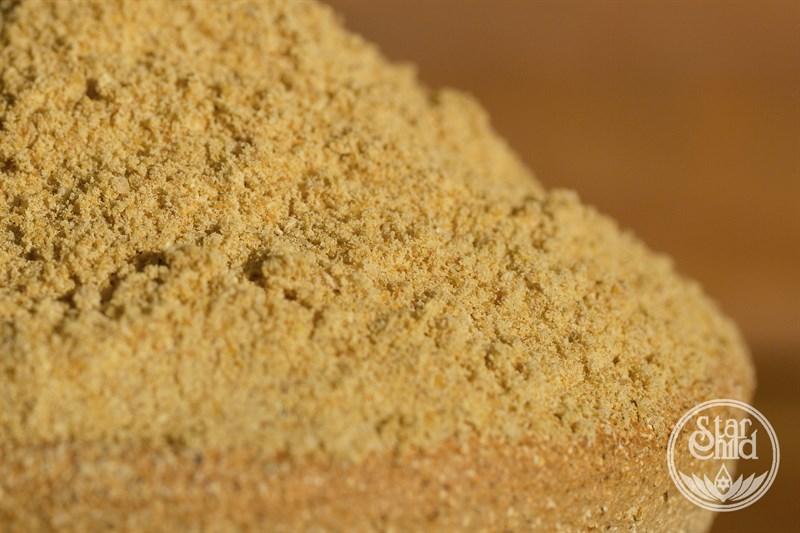
Asafoetida is an oleoresin derived from an impressive member of the carrot family that can grow up to 12 ft high. It is related to the giant fennel of Greek mythology, that was said to have concealed the fire of heaven Prometheus managed to steal from the Gods, an association that is reflected in the Latin name 'ferula' - meaning 'a carrier'. The oleoresin is gathered by incising the root stem. The exuding resin is at first whitish/translucent, but turns reddish brown as it oxidizes. Three forms are available to trade - the extremely pungent, reddish brown, hardened oleoresin, which must be pounded in a pestle and mortar, a paste and a powder. The paste and powder are mixed with various substances, such as rice flour and can be added directly to a dish (use in small quantities). The resin is the most potent and must be quickly stir fried in oil to better disperse its flavour. Use in miniscule quantities: a pea-sized morsel is enough to flavour a large pot of food. Although Ferula Asa foetida, is the most common source of the spice, other, closely related Ferula species may also be used.
Asafoetida is said to have come to Europe with the returning troops of Alexander the Great. It was a common spice in Roman times, but its popularity diminished sometime during the late Middle Ages. In India and Asia, however, it continued to be much in demand to the present day. Pious Hindu and Jain monks, who refrain from onions and garlic, use asafoetida as a substitute. It is often used to flavour dhal, lentils and beans, as well as other vegetable dishes on account of its anti-flatulence properties.
Traditional
Chinese and Ayurvedic medicine value Asafoetida as a stimulating digestive aid that helps to ease nervous indigestion and other digestive troubles that have their root cause in nervous tension (e.g. diarrhoea or constipation) and also recommends it for candida and digestive problems associated with chronic fatigue syndrome. Asafoetida is also used for respiratory conditions, since the essential oil contained in the spice is excreted through the lungs. It is recommended to use this herb intermittently rather than continuously, since it is very strong.
Magical
Magically, both Asafoetida, as well as the closely related Galbanum are used as banishing herbs. It can exorcise those panic inducing free floating phantoms of fear. The pungent smell is said to dispel demons and is sometimes burnt as incense for protection, or worn as an amulet to avert the evil eye. It also helps focussing and concentrating the mind, helping those who are overly sensitive and ungrounded to find their inner balance.
Synonyms
Giant Fennel, Jowani Badian, Stinking Gum, Devil's Dung, Hing, Kayam, Ting.