

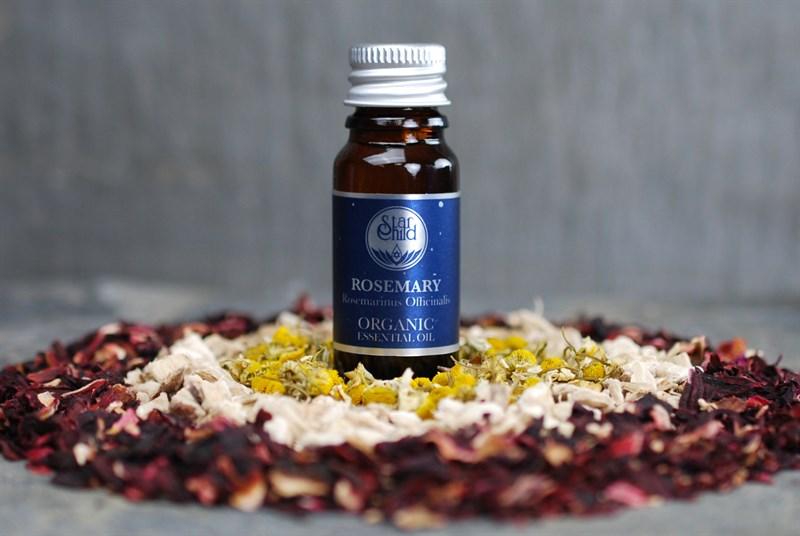

ROSEMARY ESSENTIAL OIL
Rosemarinus officinalis
Rosemary carries the energy of a stern teacher. Although it is an herb of the sun, it is not bright and sunny, but rather, serves as a constant reminder of our highest consciousness and conscience. Rosemary is a herb of memory and so it has become associated with all the things and people we want to keep alive and dear in our hearts. It is an herb of love, though it is anything but erotic. Rather, it is a reminder of the bond between the souls, the special spirit tie that is so easily forgotten amidst the ups and downs of day to day life. It is also a funerary herb, thrown on the grave as a last assurance that the soul of the departed will never be forgotten. More mundanely, Rosemary also helps students with their studies, or old people with their fading memories. In medieval times it was one of the most important herbs of the still room and it was extensively used in dozens of cosmetic or remedial preparations. Rosemary is a Mediterranean herb that likes to be kissed by the Sea - although it does not have to 'see' the sea, it never grows far from it in the wild. The leathery, scented leaves look more like evergreen needles than leaves. Early in spring (in France as early as January) the shrubby bushes become laden with flowers that are very popular with bees. Although not the most lovely smelling essential oil, it is invaluable for its therapeutic effect, particularly with regards to many of our modern 'civilisation' diseases.
Traditional
Rosemary is stimulating and acts particularly well on the peripheral circulation and blood supply to the head. It can be used to stimulate the senses and to 'oil' the memory and brain function. It can be helpful for headaches, especially when these are due to overwork. Rosemary is also good for all kinds of muscle aches and rheumatic pains, gout, neuralgia and similar. It stimulates the heart and can be used as an inhalant for respiratory complaints. It is an excellent oil for civilisation diseases such as 'manager disease', stress related conditions and mental or nervous exhaustion and fatigue. It can be used in aromatherapy skin care as a toning agent and for hair care products to check dandruff and loss of hair. Caution: Not recommended during first 4 months of pregnancy or if suffering from high blood pressure.
Magical
Rosemary has a long and intricate history as a magical herb. It is strongly protective and purifying, warding off evil influences and witches and cleansing the atmosphere of bad energies. It has been used to burn in sick-rooms to and can be used in healing rituals to help to dispel the demons of disease. It can protect against bad dreams and all manner of evil influences. Rosemary can support the student by helping him or her memorise the teachings and to concentrate on the work. It is used at funerals to keep the memory of the departed alive. At weddings it is used to remember the timeless bond of the souls and the love that has brought the couple together. Rosemary gives vigour, strength, courage and mental clarity.
Scent
An herbaceous, slightly camphor-like, woody scent. Blends well with Cypress, Frankincense, Lavender, Citronella, Bergamot, Marjoram, Thyme, Pine, Basil, Peppermint, Elemi, Cedarwood, Petitgrain, Juniper and Peppermint.
Synonyms
~
Country of origin
Spain